
ADUs in South Florida: what to know before you build
An accessory dwelling unit, or ADU, is a second, smaller home on the same property as your main house. It has its own entrance and usually its own bathroom and kitchen or kitchenette. In South Florida, families build them for aging parents, adult children, long-term guests, a home office or, where the city allows it, rental income.
Three common types
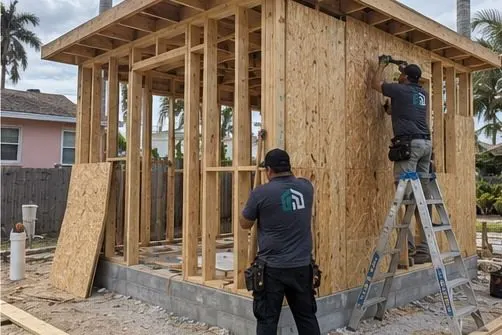
- Detached ADU. A separate building in the backyard. It gives the most privacy and needs the most yard space.
- Attached ADU. An addition to the side or rear of the house with its own entrance. It works well on narrower lots.
- Garage conversion. An existing garage turned into living space. It is often the fastest route because the shell is already built.
What decides whether you can build one
Each city in Broward County sets its own zoning rules for accessory units, including where they can go on the lot, how large they can be and whether they can be rented. Homeowners associations can add their own design rules. Before any design work, we check your parcel with the city and, if you have one, your HOA, so you know what is possible.
Built for hurricane country
Broward County is in the High-Velocity Hurricane Zone of the Florida Building Code. That means engineered foundations and roof connections, impact-rated windows and doors, and permitted, inspected work. Heat and heavy summer rain also shape the design: good insulation, efficient cooling, roof overhangs and drainage that moves water away from the new unit.
How our design-build process works
- A site visit to review your lot, access and goals.
- A feasibility check on zoning, setbacks and permits.
- Design and a written scope and estimate.
- Permit drawings, submittal and city comments.
- Construction with each required inspection.
- A final walkthrough and permit closeout.
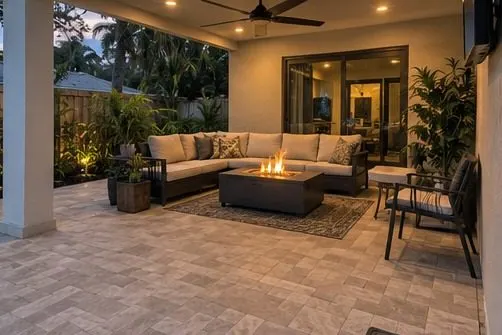
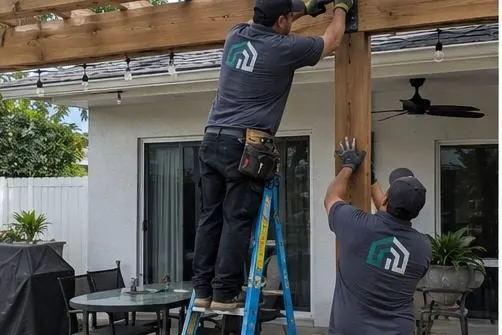
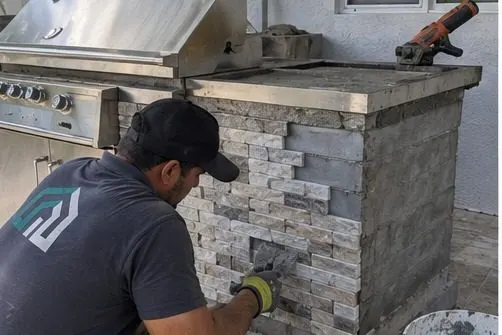
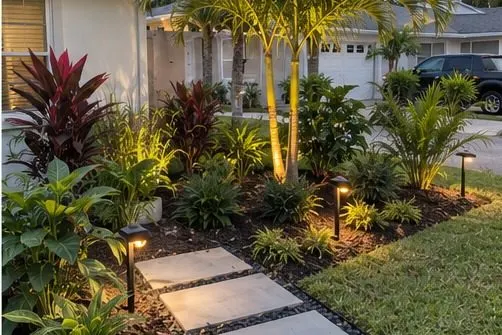
Learn more about ADU construction, or see how an ADU fits with the rest of your yard: pergolas, outdoor kitchens, pool decks, landscape design and complete outdoor living spaces.